A Digital Flâneur in Athens
A flâneur is an urban wanderer: someone who explores a city with no fixed destination, simply observing life as it unfolds. Baudelaire described the flâneur as a “gentleman stroller of city streets”. Tired of over-planned holidays, I decided to play the flâneur on a recent trip to Athens.
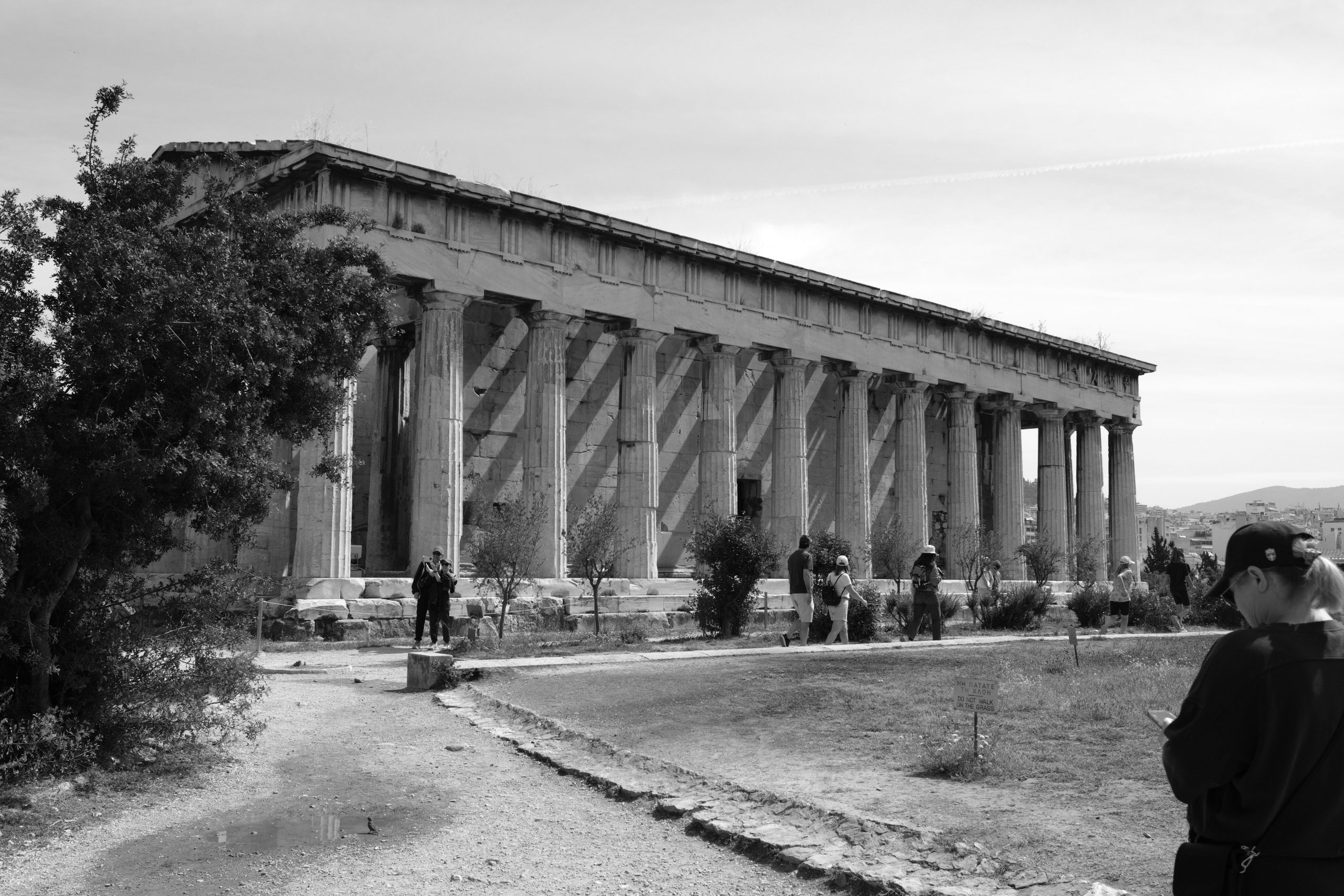
Athens is an easy city to explore. The Parthenon is clearly visible from anywhere in the city. The stunning modern Acropolis Museum; the Agora, birthplace of democracy, and many more sights are short walks away from each other. The Plaka and neighbouring Thiseo district are delightful parts of the city to get lost in. In some of the oldest continuously inhabited neighbourhoods of Athens, there are thousands of years of history waiting to be unpeeled.
I tucked my iPhone into a man bag, donned a straw trilby, and walked out of my hotel armed only with sunglasses. The sunglasses in question are the result of Meta’s collaboration with Ray-Ban: outwardly ordinary Wayfarers, they pack a surprising amount of technical smarts inside.

The Ray-Ban Meta glasses are equipped with a discreet camera capable of taking still photographs and recording up to 30 minutes of video. Open-ear speakers built into the arms direct sound into your ears while cancelling sound waves going away from you – minimising what others can hear. Five embedded microphones capture spatial audio while filtering out ambient noise. Meta AI is built in. A bright white light illuminates when the camera is active, warning others they are being photographed. Living in London, I generally assume somebody is watching me all the time anyway — usually the government.
The first test came when I encountered a statue bearing only a Greek inscription.
“Hey Meta, whose statue is that?” I whispered.
Meta confidently informed me it was a statue of the first female professor at the University of Athens.
“Hey Meta, I know shit about Greek pronouns, but that’s definitely a bloke.”
Without missing a beat, Meta corrected itself, identifying the statue as “Konstantinos Paparrigopoulos, the “father of modern Greek history”, who taught at the university.
Despite the occasional hallucination, Meta’s Greek translation capabilities are far better than my own. Covering the English inscription on another statue, I asked Meta to translate the Greek text. It did so flawlessly, summarising it almost instantly.
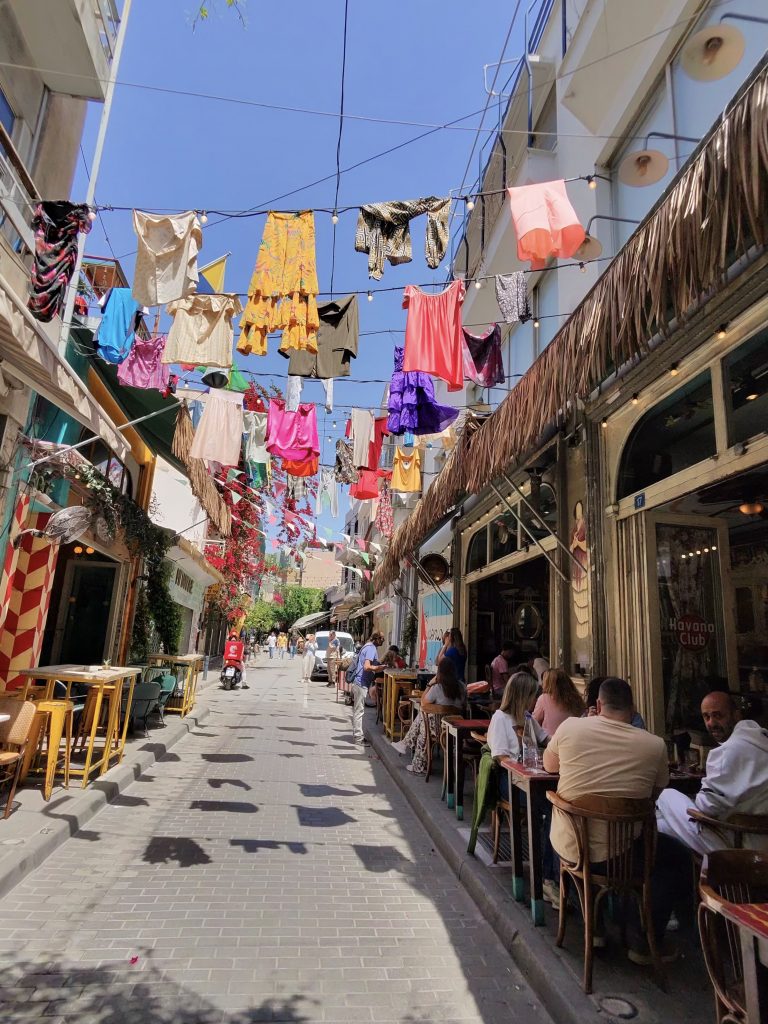
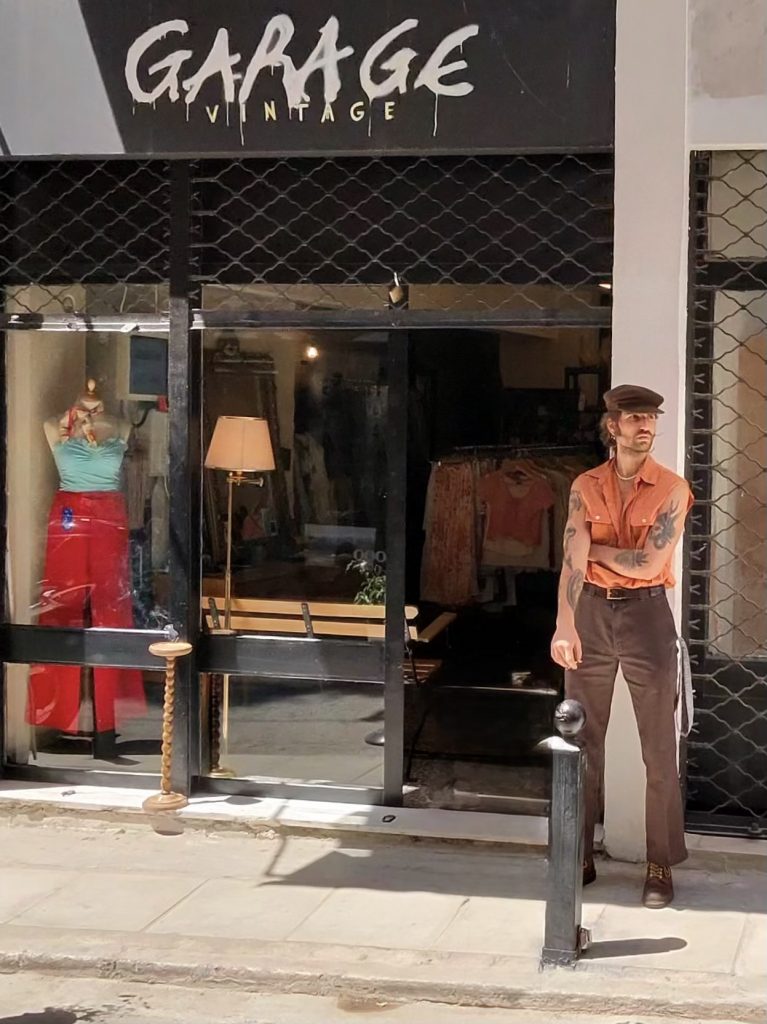
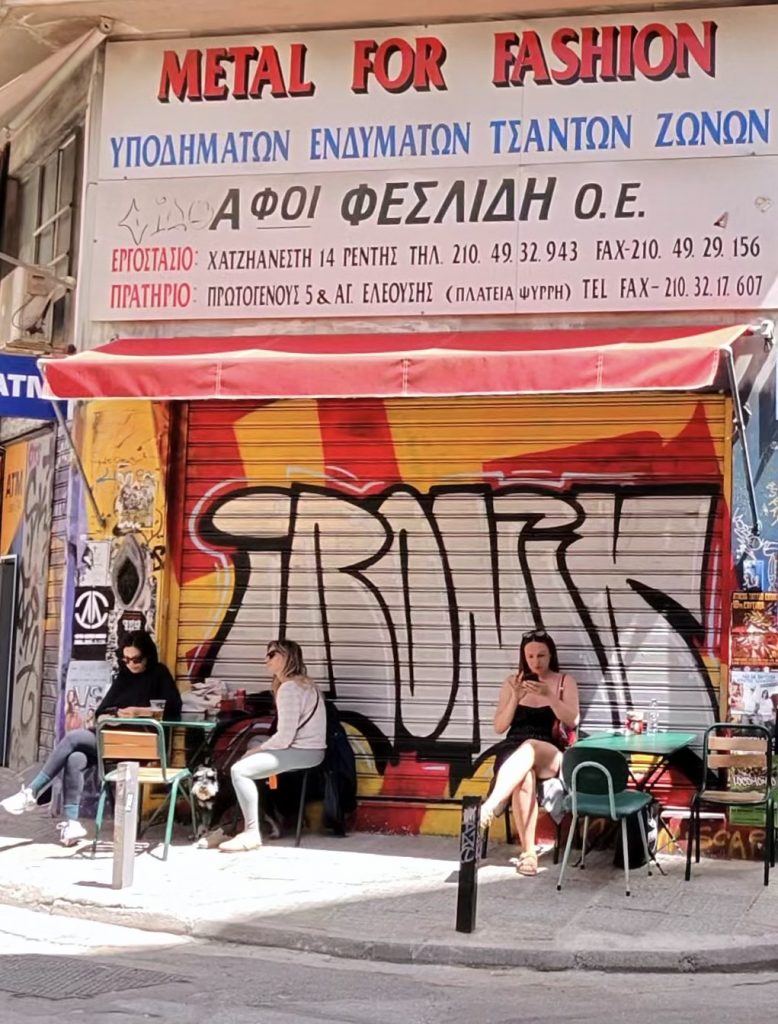
I could have used the glasses to make phone calls or listen to music while wandering the city, but that felt contrary to the spirit of the flâneur. However, the Meta Ray-Bans are superb for street photography, which is the exercise of observing ordinary life in public spaces.
Henri Cartier-Bresson, one of the pioneers of street photography, famously wrapped his Leica camera in black tape and concealed it beneath a handkerchief so people would not realise they were being watched. The wide angle 12mm–21mm equivalent Meta lens is remarkably well suited to this style of photography.
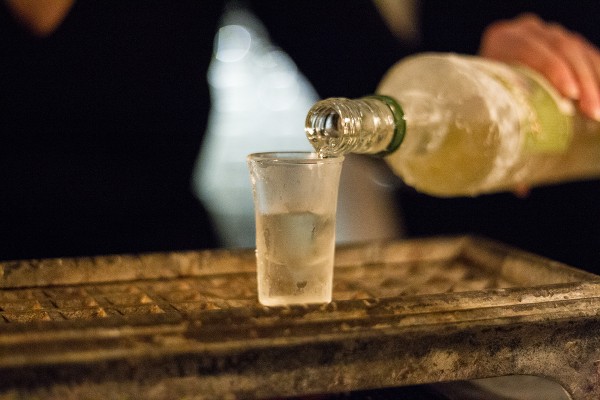
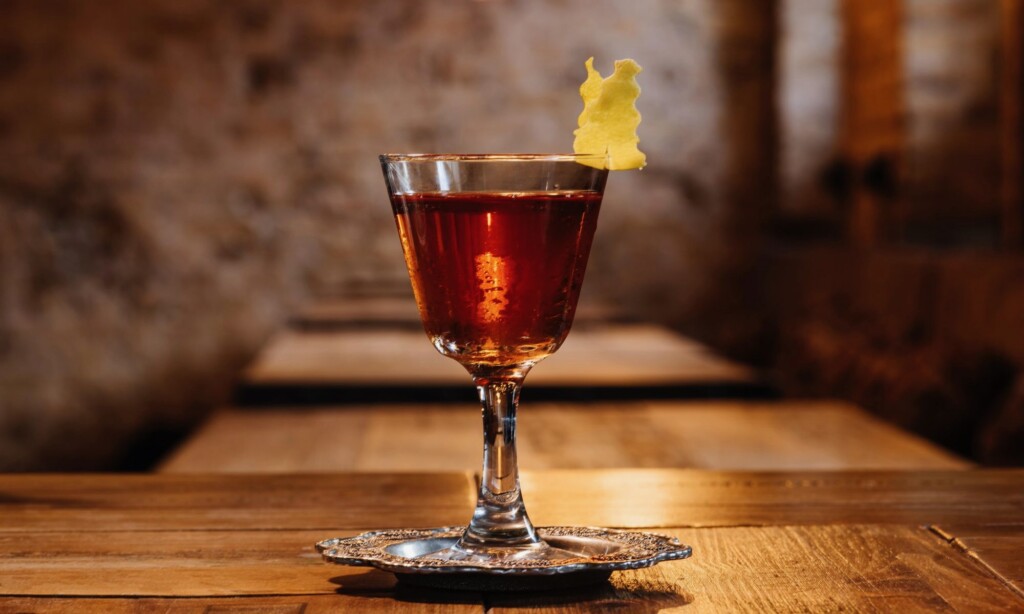
The trip also became an unexpectedly glorious exploration of Greek wine.
For many of us, the words “Greek” and ”wine” still trigger memories of retsina consumed in inexpensive tavernas, followed inevitably by a complimentary glass of Metaxa “on the house,” and a challenging morning after. The reality is far more interesting.
Many of the best Greek wines are produced by small family estates and rarely make it abroad. However, some of the wines I sampled, are available in London. The country’s geography and climate create the conditions for an astonishing variety of wines, with many islands possessing their own indigenous grape varietals.
In keeping with the spirit of the flâneur, I resisted the urge to consult my Vivino wine app, relying instead on the recommendations of sommeliers.
The real surprise is the quality of the rosé. Unlike the pale, easy drinking Provençal rosés popularised by LVMH’s Whispering Angel; Greek rosés are fuller-bodied and able to stand up to savoury food.
At Dopios Athens, a relaxed restaurant in the Plaka district, I drank a crisp, mineral-driven Assyrtiko from the Akrothos vineyard. The best meal of the trip came at the rooftop restaurant of the Grande Bretagne hotel, in the shadow of the Hellenic Parliament. There I chose a rosé from Santos Wines, made from Assyrtiko and Mandilaria grapes grown in Santorini’s volcanic soil. Substantial enough to work well with savoury food, the wine remains bone dry.
Another memorable rosé is produced by Novus from a blend of Agiorgitiko grapes, Greece’s best known red grape varietal. I sampled a bottle at Taverna 37, the beachside restaurant at the Four Seasons Astir Palace. If the crowds, heat and dust of Athens begin to overwhelm you, the beach at the Four Seasons is a welcome escape.
I visited in May, which may be the ideal time to explore Athens. The shoulder seasons offer warm days without the punishing summer heat, while evenings remain cool enough for wandering. I have visited many of the Greek islands over the years but had somehow never ventured properly into the capital. Athens turns out to be an excellent city in which to slow down, wander aimlessly, and play at being a flâneur.